
Tuesday, May 7, 2013
Assesing Water Quality
There are a few steps one should follow in order to assess a body of water. The first is that you should evaluate by observation. See if there is an algae bloom that could indicate pollution, or a particular smell that could tell you what particular algae is growing in the water. Next, capture and identify algae. Certain algae will tell you what kind of condition the water is in. If it's an algae such as Anabaena, the water would be in poor quality. Next, test the pH, ammonia levels, temperature, dissolved oxygen levels, nitrate levels, and nitrite levels. Finally, run a panel of chemical tests. It's important to do the steps in this order because it can save you time as well as money. Organisms such as algae or the lack of algae could help you determine how bad/good the water just by observation instead of having to run chemical test which would be a waste of time and money.

Dissolved Oxygen in an Ecosystem
Two sources of dissolved oxygen is contact with the atmosphere and plants in the water. Throughout the day, the levels of oxygen and carbon dioxide fluctuates. When the sun is up, the levels of oxygen increases as plants undergo photosynthesis while the levels of carbon dioxide decrease as a result of the plants absorbing it. During the night however, levels of CO2 increases while O2 decreases. This is because even though production of oxygen by plants ceased for the day, other organisms are still undergoing cellular respiration, using the remaining oxygen while producing CO2.

Dissolved Oxygen
Dissolved oxygen is the amount of oxygen in the water. To do a dissolved oxygen test, first take the "special cylinder", as Ms Wind put it, and fill it with 25 mL of water from your tank. Next, take one of the glass tubes that's filled with a straw color yellow. Next, place it in the cylinder, breaking the tip off. Let it sit in the water for a few seconds before removing it. Then, place your finger over the opening, covering it and gently swish is around. then, let it sit for about two minutes. Lastly, compare your results with the chart. If the level is below 3 mg/L, there isn't enough dissolved oxygen and your fish will die. Anything over 5 mg/L can support life and is a good dissolved oxygen test result. My results were 10 mg/L which is good. In a small pond, the dissolved oxygen is probably lower than in a large river because a pond is usually warmer which holds less dissolved oxygen and fast moving water is more air rated, allowing for more dissolved oxygen.

The darker the blue, the more dissolved oxygen there is.
The darker the blue, the more dissolved oxygen there is.
Aquacheck
Aquachecks are important to know the quality of your water, whether it be in an aquarium or something else. The five components of an aquacheck are free chlorine, total chlorine, total hardness, total alkalinity, and pH. Free chlorine refers to the free ions in the water while total chlorine is the combination of free chlorine and combined chlorine which is the combination of ammonia to form chloramine. Total hardness refers to the amount of dissolved minerals in the water. Total alkalinity is the measure of the buffering capacity of water, or in laymen terms, the resistance to change in pH. pH is how acidic or basic water is, ranging from 0-14, 0 being the most acidic while 14 is the most basic and 7 is neutral.
The results of my aquacheck was .5 for free chlorine, 0 for total chlorine, 250 for total hardness, 180 for alkalinity and 7.8 for pH. Overall the results were good except for the free chlorine because chlorine is what kills fish. The hardness is good for the fish I have selected for my aquarium and the alkalinity is decent because a higher number means a higher resistance to change in pH. The pH was neutral/slightly basic which is good. A pH of 4 affects fish reproduction and a pH of 3 kills adult fish. So all in all, the aquacheck showed that my water was good for my fish to live in.

The results of my aquacheck was .5 for free chlorine, 0 for total chlorine, 250 for total hardness, 180 for alkalinity and 7.8 for pH. Overall the results were good except for the free chlorine because chlorine is what kills fish. The hardness is good for the fish I have selected for my aquarium and the alkalinity is decent because a higher number means a higher resistance to change in pH. The pH was neutral/slightly basic which is good. A pH of 4 affects fish reproduction and a pH of 3 kills adult fish. So all in all, the aquacheck showed that my water was good for my fish to live in.
My Fish
Well as of now, I only have three fish; a minnow, a Dalmatian Lyretail Molly, and a Red Mickey Mouse Platy. Each fish has different requirements and behavior.
Some minnow behaviors and requirements include:

Some minnow behaviors and requirements include:
- Most minnows do well in single-species groups in 20-gallon aquariums with canister or trickling filtration
- water changes
- They do well on a diet of flakes
- Most cannot tolerate heat, and some require a chiller.
- Dart around
- Don't stay in the same place for too long
- Not affected as much as other fish to certain levels or ammonia or nitrate
- Male minnows make a knocking sound when threatened by other males
- Have a bubbler to keep oxygen in the water
- Only need to be fed once a week
- Minimum tank size needed is 25 gallons
- Water pH: 7 to 8.5
- Water Hardness: Medium hard to hard
- Temperature needed is 78-82°F
- Does best with two or more Mollies. Will successfully live with Angels, Barbs. Danios, Gouramis, Platies, Rainbows, Tetras and other community fish
- Ir will eat algae and aquarium plants
- Favors living in the upper half of the aquarium
- It is a non-aggressive fish which gets along with others very well
- This fish prefers an aquarium with a sandy or gravel bottom, good filtration, and lots of real or plastic plants and wood features along the tank walls.
- The Dalmatian Lyretail Molly can successfully live in a wide variety of aquarium setups
- Water temperature: 72-82° F
- Tank Setup: 10+ gallons, moderately planted
- Active, peaceful, schooling fish that mix well with other community fish
- Live bearing species, meaning they give birth to free-swimming offspring
- Hardness: 10-25 dGH
- They will graze on vegetation
- Tank Level: Mid dweller
- Suitable for even small aquariums
- Alkaline water of moderate hardness is ideal
- A varied diet including plenty of vegetable matter will insure good health
Sunday, May 5, 2013
The Dallas World Aquarium
The field trip was really fun, however, I almost didn't make it as a result of my 1st period substitute teacher not letting me leave the class, causing me to miss the bus. My stepmother drove me there, and from then on, it was a blast. I thoroughly enjoyed looking at all the animals and the overall atmosphere of the aquarium. However, I felt as though we were rushed so I missed a few exhibits. I would've liked to stay longer than we did. The most interesting thing I saw was the saw fish. It just looked so different from everything else, plus it was really awesome being in the shark tunnel and have it swim overhead.


Five things I learned from this field trip include:

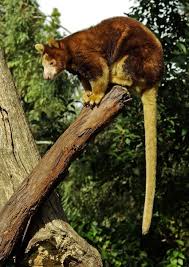


Five things I learned from this field trip include:
- The Japanese Spider Crab is dimorphic, meaning that the male and female look different
- The Matschie's Tree Kangaroo is an endangered animal
- Spotted Eagle Rays tend to stay in groups
- Sloths move so slow that algae grows on their fur, providing camouflage for it
- Capybaras are the world's largest rodents
Aquarium Update
So I was absent for the first two days of the week and came into class Wednesday to find out that Exstacy had died. For the past week, his left eye had been inflamed, almost three times the normal size, and had white parasite-looking things attached to his body. We had tried fish medicine, however, I guess that didn't work because my partners found his upside down in Squidward's house.Following Exstacy's death, Meep became slightly more active, swimming further into the middle of the tank. Also, the water now is a hazy brown. Our test results were .25 ppm for ammonia, 160 ppm for nitrate,70 degrees Fahrenheit, and 21 degrees Celsius. The nitrate level was this high as a result of Exstacy's death. This is normal and should decrease is a few days. Meanwhile, Fish and Cow have not changed in behavior at all. Cow still eats like no other and Fish darts around a lot.

Subscribe to:
Posts (Atom)